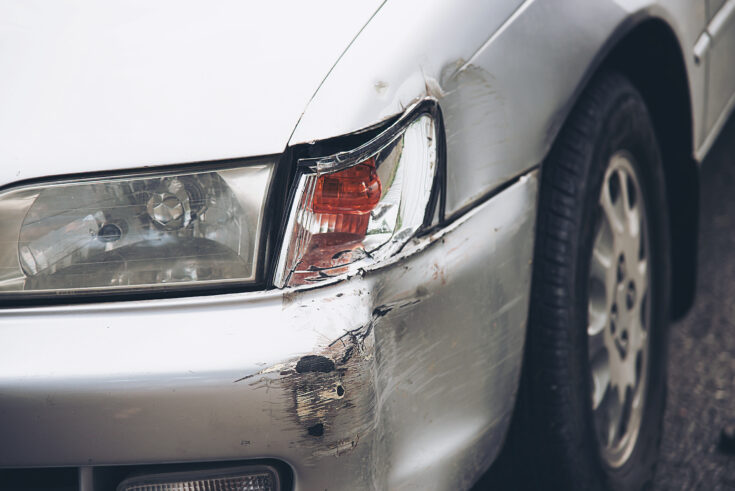

It happens to almost every driver in Los Angeles. You’re inching down the 405, or squeezing through a parking structure in Burbank, or waiting at a light on Ventura and then, that sickening crunch. A fender bender.
Your heart rate spikes. You’re not sure if you’re hurt. You don’t know if you should move the car. And somewhere in the back of your mind, you’re already worried about insurance, repairs, and how long you’ll be without your vehicle.
Take a breath. This guide walks you through exactly what to do after a fender bender in LA — step by step, in the right order — so you protect yourself legally, financially, and physically. Whether it’s your first accident or your fifth, the next 24 hours matter more than most drivers realize.
Step 1: Stop, Breathe, and Check for Injuries
The moment impact happens, your instinct might be to jump out and check the damage. Don’t.
First, make sure you and your passengers are okay. Even in a slow-speed fender bender, whiplash and adrenaline can mask pain. Ask everyone in your car how they’re feeling. Check your body — neck stiffness, head pain, or dizziness can all be early signs of injury that won’t fully appear until hours later.
If anyone is hurt — or if you’re unsure — call 911 immediately. In California, you’re also legally required to report an accident to the police if there is any injury or property damage above a certain threshold. When in doubt, call.
If the collision was minor and everyone appears okay, turn on your hazard lights. If the vehicles are drivable and blocking traffic, move them to the shoulder or a nearby parking lot. LA traffic moves fast — keeping vehicles in a live lane puts everyone at risk.
Step 2: Secure the Scene and Exchange Information
Once you’re safely out of traffic, it’s time to handle the exchange. This is where a lot of drivers make costly mistakes — either saying too much or walking away without enough information.
Here’s what you need to collect from every driver involved:
- Full legal name and contact number
- Driver’s license number
- License plate number
- Vehicle make, model, and year
- Insurance company name and policy number
Collect the same from any witnesses who stopped. Witness accounts can be critical if fault becomes disputed later and in LA, it often does.
One rule that can’t be overstated: do not admit fault. Not even a casual “I’m so sorry, I didn’t see you.” California uses a comparative fault system, meaning even a partial admission can affect your financial liability and insurance payout. Be polite, be calm, and let the insurance companies and any legal representatives determine fault.
Never Say These Things at the Scene:
- “It was my fault” or “I’m sorry”
- “I don’t think I need to call insurance for this”
- “My car is fine, don’t worry about it”
- “Let’s just handle this between ourselves”
- Any estimate of your injuries — you don’t know yet
Step 3: Document Everything at the Scene
Your smartphone is your best tool right now. Before any vehicles are moved from their final resting positions, start documenting. This evidence is time-sensitive — once cars leave the scene, it’s gone.
Photos and video to capture:
- All vehicles involved — from multiple angles
- Close-ups of all visible damage on every car
- Both license plates — clearly readable
- The road conditions, traffic signals, and surrounding area
- Skid marks, debris, or anything relevant to how the accident happened
- Street signs or landmarks that establish the exact location
- The other driver’s insurance card and license (photograph it, don’t just write it down)
If police are called to the scene, get the officer’s name and badge number. Ask how you can obtain a copy of the police report — you’ll want this for your insurance claim.
Also note the time, date, and weather conditions. Write it down or record a quick voice memo while it’s fresh. Memory fades fast, especially after an adrenaline spike.
Step 4: Contact Your Insurance Company
Most insurance companies require you to report an accident promptly — often within 24 hours. Waiting too long can complicate or even jeopardize your claim.
When you call, stick to the facts. Describe what happened neutrally and objectively. Do not speculate about fault, do not minimize or exaggerate damage, and don’t give a recorded statement without understanding what you’re agreeing to. If you’re unsure, you’re allowed to say “I’d like to consult with my body shop before providing a full statement.”
Many insurance apps now allow you to begin a claim right from your phone. This can speed things up — but if the app isn’t clear or you feel overwhelmed, calling a representative is always the right move.
One thing most LA drivers don’t know: a certified auto body shop can handle the insurance process on your behalf. From filing the claim to negotiating with adjusters to ensuring every repair cost is properly covered — a shop that advocates for you can make an enormous difference in the final payout. More on that below.
Step 5: Don’t Assume “Minor” Means Harmless
This is where fender benders get deceptively costly. That small dent on your bumper? It may be hiding sensor damage, alignment issues, or frame displacement that won’t show up until your car starts pulling to one side three weeks later.
Modern vehicles are packed with technology. Your bumper alone can house parking sensors, radar units for adaptive cruise control, and backup cameras. A low-speed impact that leaves only cosmetic damage to the bumper cover can still knock those systems out of calibration.
And frame damage — even minor structural shifts — can affect how your car handles, how your tires wear, and critically, how your vehicle performs in a second accident. Crumple zones work once. If they’re already compromised and not repaired correctly, your car may not protect you the way it was engineered to the next time.
Never skip a professional inspection after a collision, no matter how small it seemed. A certified collision center will scan your vehicle before and after repairs to document all damage — visible and hidden.
Step 6: Choose Your Auto Body Shop And Choose Carefully
This decision matters more than most people give it credit for. In Los Angeles, you have hundreds of options — and not all of them will fight for your vehicle the way it deserves.
Here’s what to look for in a certified collision center after a fender bender in LA:
- OEM certification for your vehicle’s make — this ensures factory-specified repair procedures
- I-CAR Gold Class technicians — the industry’s highest training standard
- Full insurance claim handling — they deal with the adjuster so you don’t have to
- Free towing from the accident scene to the shop
- Pre- and post-repair scanning to catch all damage, including hidden sensor issues
- A written warranty on all workmanship — look for lifetime guarantees
- A rental car setup so you’re not left stranded while your car is being repaired.
Remember: California law gives you the right to choose any shop you want. Your insurer may suggest their preferred network — but you are not obligated to use it. A shop that is certified, experienced, and willing to go to bat for your claim is almost always the better choice than whichever facility your insurer routes you toward by default.
Your Complete 24-Hour Fender Bender Checklist
| Timeframe | Action |
|---|---|
| Immediately | Check yourself and passengers for injury. Move to safety if possible. |
| 0–5 minutes | Call 911 if there's injury or major property damage. Turn on hazard lights. |
| 5–15 minutes | Exchange insurance, license, and contact info with all drivers. |
| 15–30 minutes | Document the scene — photos of all vehicles, license plates, road conditions. |
| 30–60 minutes | Contact your insurance company to open a claim. |
| 1–3 hours | Call a certified auto body shop to arrange towing and start the repair process. |
| Same day | Avoid admitting fault in any communication. Save all photos and paperwork. |
| Within 24 hours | Follow up with your insurer, confirm your shop is handling the claim, get a rental car if needed. |
The Biggest Mistakes LA Drivers Make After a Fender Bender
Most of the mistakes happen not at the scene but in the hours and days that follow. Watch out for these:
Settling on the Spot Without Insurance
It’s tempting when damage looks minimal. The other driver offers cash and asks you to keep insurance out of it. The problem: damage that looks like $300 on the surface can reveal $3,000 worth of sensor and structural work once a shop gets into it. Once you’ve agreed to a private settlement, you have no recourse.
Waiting Too Long to File
California’s statute of limitations for property damage claims is three years — but your insurance policy may have much shorter reporting windows. And the longer you wait, the harder it becomes to link any damage directly to the accident.
Going to a Non-Certified Shop to Save Money
A cheaper repair that doesn’t restore your vehicle to factory specifications can lower your resale value, void your warranty, and leave you with safety systems that don’t work correctly. The short-term savings rarely survive the long-term consequences.
Skipping the Post-Repair Scan
Demand a post-repair diagnostic scan from your shop. It’s not optional — it’s how you verify that every system affected by the collision has been properly restored. A reputable certified shop will do this as a matter of course.
Got Into a Fender Bender in LA? AutoLux Collision Center Has You Covered
At AutoLux Collision Center in Sun Valley, we specialize in exactly this scenario: LA drivers who need fast, certified, hassle-free collision repair after a fender bender. Here’s what we do for you from the moment you call:
- Free towing straight from the accident scene to our shop
- Full insurance claim handling — we deal with your adjuster and fight for complete coverage
- Pre- and post-repair scanning on every vehicle
- OEM-certified repairs for Hyundai, Kia, Genesis, Nissan, INFINITI, Ford, GM, Chrysler, Dodge, Jeep, RAM, FIAT, and Alfa Romeo
- I-CAR Gold Class certified technicians
- Limited lifetime warranty on all paint and bodywork
- Rental car coordination so you stay mobile
FAQ
1. Do I have to call the police after a minor fender bender in California?
In California, you are required to contact law enforcement if there is any injury or if property damage appears to exceed $1,000. For very minor scrapes with no injury, documentation via photos may suffice but when in doubt, it’s always safer to call.
2. How long do I have to report a fender bender to my insurance company?
Most insurance policies require prompt reporting typically within 24 to 72 hours. Check your specific policy, but as a general rule, report as soon as possible. Delays can complicate or void your claim.
3. How long does fender bender repair take in Los Angeles?
Minor fender bender repairs at a certified collision center typically take 2–5 business days, depending on the extent of damage, parts availability, and insurance approval speed. A shop that handles insurance directly often moves through the approval process faster than shops that leave that burden to the customer.
4. Can a fender bender cause frame damage?
Yes. Even low-speed impacts can cause structural shifts, particularly in the front unibody of modern vehicles. A certified auto body shop will perform a structural inspection and measure key points against manufacturer specs to confirm whether frame straightening is needed.