
Your car got hit. The bumper’s fixed, the paint matches, and everything looks brand new. But if your vehicle has features like lane-keep assist, automatic emergency braking, or adaptive cruise control, there’s a critical step that happens behind the scenes before it’s truly ready to drive: ADAS calibration.
Here’s what it actually involves, and why skipping it isn’t an option.
What Is ADAS, and Why Does a Collision Affect It?
ADAS means Advanced Driver Assistance Systems. These systems use cameras, radar sensors, and software. They power features like lane departure warnings, automatic braking, blind-spot monitoring, and adaptive cruise control.
These systems depend on extremely precise positioning. A forward-facing camera mounted behind your rearview mirror has to point at an exact angle. A radar sensor behind your front bumper has to align within fractions of a degree. When a collision moves a bumper, a windshield, or any part of the vehicle’s structure near these components, even slightly, that precision disappears. Straightening the panel or replacing the part doesn’t restore it. A technician has to recalibrate the system to make it work correctly again.
Step 1: Post-Repair Diagnostic Scan
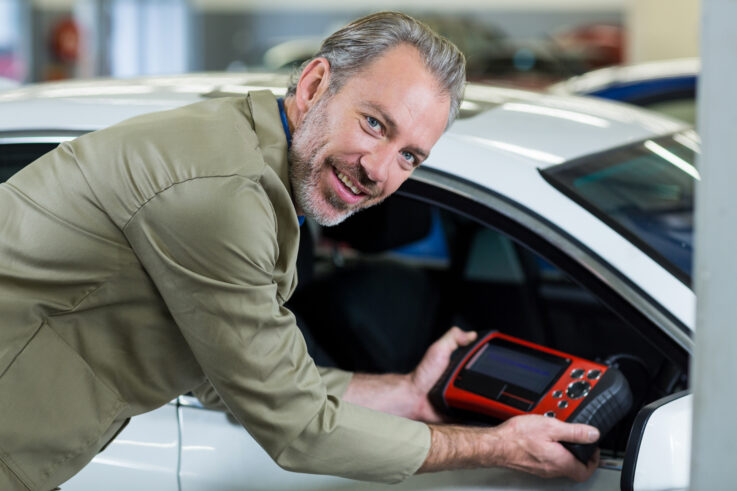
Once the physical repair work is complete, the vehicle goes through a full diagnostic scan. This identifies exactly which ADAS-related systems the accident and repair affected, not just the ones that seem obviously related to the damage.
Modern vehicles often have more interconnected sensors than people expect, so this scan determines the calibration plan, rather than relying on guesswork based on visible damage.
Step 2: Determining the Calibration Type
Not all calibrations work the same way. Depending on the vehicle and which systems the collision affected, a technician will need one of two approaches:
- Static calibration: technicians perform this in the shop using specialized targets, rulers, and equipment set up at precise distances and angles from the vehicle. This is common for front-facing cameras and radar units.
- Dynamic calibration: technicians perform this by driving the vehicle under specific conditions, often at certain speeds and on roads with clear lane markings, while a scan tool monitors the system in real time.
Some repairs require both. The vehicle manufacturer’s specifications determine exactly which method applies.
Step 3: Performing the Calibration
This is the technical part: a technician aligns cameras and sensors to manufacturer-exact specifications using OEM procedures and equipment. It’s precise, methodical work, not something a technician can eyeball or approximate. A calibration that’s off by even a small margin can cause a safety system to misread the road, which defeats the purpose of having it in the first place.
Step 4: Verification Scan
After calibration, the vehicle goes through another diagnostic scan to confirm every affected system reads correctly and communicates properly with the rest of the vehicle’s electronics. This step proves the calibration actually worked, rather than simply assuming it’s correct.
Why Skipping Calibration Is Dangerous
A car that looks perfectly repaired can still carry silently miscalibrated ADAS systems. That might mean:
- Lane-keep assist that nudges the wheel at the wrong moment, or not at all
- Automatic emergency braking that reacts late or doesn’t trigger
- Adaptive cruise control that misjudges the distance to the car ahead
None of this shows up from the outside. The car drives fine until you actually need one of these systems. That’s why calibration is not optional. It is required to return a vehicle to a safe, factory-equivalent condition after some repairs.
What Does ADAS Calibration Typically Cost?
Calibration costs vary depending on the vehicle, the number of systems affected, and whether the repair requires static calibration, dynamic calibration, or both. Calibration commonly adds a meaningful amount to a repair total, which is one reason a rear-end collision that looks like a simple bumper repair can end up costing more than expected once a shop properly accounts for every affected system.
How It Shows Up on Your Repair Estimate
If you’ve reviewed a collision repair estimate and noticed a line for diagnostic scans or electronic calibrations, this is exactly what it refers to. It’s a standard part of a proper repair on many modern vehicles, not an upsell.
AutoLux Collision Center and ADAS Calibration
As an OEM-certified collision center, AutoLux performs and coordinates ADAS calibrations as part of our standard repair process for vehicles equipped with these systems. We follow manufacturer-specific procedures for each brand we’re certified to repair, so we verify your vehicle’s safety systems actually work correctly, not just look repaired.
If your vehicle needs a repair that involves ADAS calibration, contact AutoLux Collision Center in Sun Valley, CA, to get it done right the first time.
FAQ
1. What is ADAS calibration?
ADAS calibration is the process of realigning and testing the cameras, radar sensors, and other components used by Advanced Driver Assistance Systems. These systems support features such as lane-keep assist, automatic emergency braking, blind-spot monitoring, and adaptive cruise control.
2. Why is ADAS calibration needed after a collision?
A collision can slightly change the position or angle of cameras and sensors, even when the damage appears minor. ADAS calibration restores these components to the vehicle manufacturer’s specifications so the safety systems can operate correctly
3. What is the difference between static and dynamic ADAS calibration?
Static calibration is performed in a controlled shop environment using specialized targets and equipment. Dynamic calibration involves driving the vehicle under specific road and speed conditions while diagnostic equipment monitors the system. Some vehicles may require both methods.
4. How much does ADAS calibration cost?
ADAS calibration cost varies depending on the vehicle, the number of systems that need calibration, and whether static, dynamic, or both types of calibration are required. The cost may appear as a separate diagnostic or electronic calibration item on a collision repair estimate.
5. How do I know if my vehicle needs ADAS calibration after an accident?
The need for calibration is determined through diagnostic scans and the vehicle manufacturer’s repair procedures. Repairs involving areas near cameras, radar sensors, windshields, bumpers, or other ADAS components may require calibration before the vehicle is returned to the road.


